
Count surfaces rather than just doors
When someone asks for the doors painted, they may mean only the faces visible from the hallway. The painter may assume both faces, all accessible edges, the frame and the architrave. Those are materially different scopes. Walk through your Pakenham home with a simple room list and assign each door a name. Record whether both sides need work, whether it is a solid or glazed door, and whether the adjoining frame and skirting are included. Photograph details that make access awkward, including sliding tracks, fixed stops and built-in cupboards close to the frame.
Count trim separately from walls. A bedroom with several wardrobe doors can contain more detailed work than a larger room with one plain entrance. Profiled architraves, recessed door panels and narrow edges take a different approach from broad flat faces. Specify which hardware will be removed and reinstated, and who is responsible for that work. If new handles are planned, choose them before preparation so redundant holes and footprints can be considered. The point of the schedule is not to measure every millimetre yourself. It is to ensure the quote describes the same collection of surfaces that you expect to see finished at handover.
Identify what is underneath before choosing a finish
Glossy white trim could be coated with an older solvent-based enamel, a newer water-based trim coating or several layers of different products. Appearance alone does not establish which system is present. Tell the painter what you know about previous work and show any retained tins or invoices. Ask how the existing coating's soundness and compatibility will be assessed before preparation. A primer can help a correctly specified system adhere, but it cannot make a loose underlying layer securely attached to the timber beneath it.
Substrate condition also changes the plan. A timber edge with ordinary dents is different from swollen fibreboard at the bottom of a laundry frame. Recoating a damaged section may improve its colour while leaving the underlying problem unresolved. Describe swelling, softness, repeated splitting or nearby leaks rather than asking for them to be hidden. If old coatings or sheet materials are unknown, avoid sanding them as a preliminary test. Arrange appropriate assessment before disturbance. There is no need to choose a product before these questions are answered. The existing surface, intended use and preparation method together determine a suitable coating system, including any sealer, primer and finishing coats.
Separate adhesion work from cosmetic filling
Cleaning, preparing a sound glossy surface and filling dents have different purposes. Dirt and hand oils around handles interfere with a clean finish. Loose coating needs a response that addresses the weak layer. Dents and open joints need an appropriate repair, but filler should not become a substitute for repairing an unstable component. Ask the painter to describe these tasks separately in the scope. This makes it easier to understand why one doorway needs more preparation than an apparently similar doorway elsewhere in the house.
Pay attention to moving parts. Hinges, latch openings and door stops are working surfaces, not decorative details that should simply disappear under paint. Paint build-up can interfere with a door that already closes tightly. Record binding or rubbing before the job so it is not confused with a new coating defect afterwards. If adjustment or carpentry is needed, establish who will do it and when. Do not assume the painter's price includes rehanging every door. Preparation should also account for old sealant near wet areas, where a generic paintable gap filler may not suit the joint. Discuss the material and exposure instead of selecting a tube solely because its label says flexible.
Choose sheen by the surface and the room
A higher sheen makes reflected light more prominent and can reveal uneven preparation. A lower sheen may make small irregularities less noticeable, but the product must still suit doors and trim. Ordinary wall paint and a dedicated trim coating are not interchangeable just because the colour names match. Ask for the actual product and sheen on the quote. If you are comparing options, view a sample on a similar profile rather than relying only on a small flat colour card. Recesses, curves and edges catch light differently from a wall.
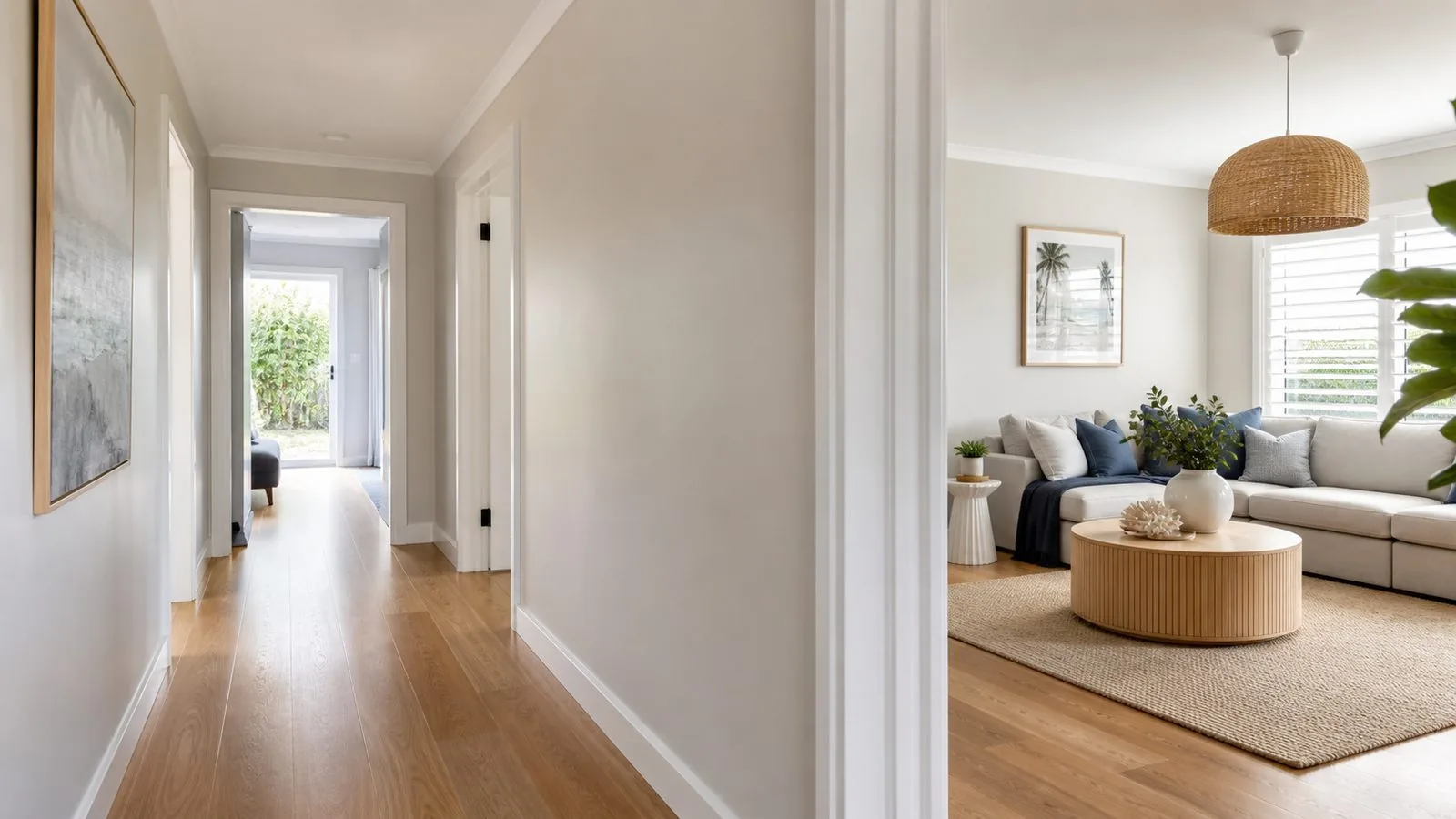
Consider the whole doorway. Bright new trim can make an older adjacent wall look discoloured, while a warmer trim can change how a cooler wall white appears. This does not automatically require repainting both. Place the proposed sample beside the retained wall and existing floor before deciding. In a hallway with several visible door frames, maintaining a consistent system across that view may matter more than matching an isolated cupboard door perfectly. Discuss whether the finish should be subtle or deliberately contrasted with the walls. That is a visual decision you can make in the room, without assuming that the glossiest option is always the most durable or the easiest to maintain.

Plan drying around doors that must close
A freshly coated door can feel dry while still being vulnerable where it presses against a stop, seal or another painted surface. The timing for recoating, handling and normal use comes from the selected product and actual conditions. Ask for those stages to be explained separately. Closing a door too soon may mark the finish or cause surfaces to stick. Leaving a door open may be impractical where privacy, security, children or pets are involved. These needs belong in the plan before the first door is removed or painted.
Identify the essential doors: the only bathroom, an external entrance, a bedroom used during the day or a pet separation door. Agree how each will operate during the work. It may be possible to stage internal doors, but an external entrance needs its own security arrangement. Do not accept a vague promise that every door will be usable at a particular hour regardless of conditions. The painter should explain how progress will be checked and what happens if drying takes longer. A staged programme may involve additional handling or return visits. That is a practical trade-off to understand when comparing it with the convenience of painting an empty house.
Coordinate trim with carpet and hard flooring
Skirting sits at the junction between trades, so it is easy for responsibility to become unclear. If flooring will be replaced, confirm whether the existing skirting stays, is removed and refitted, or is replaced. Painting removed boards can give access to surfaces that would otherwise be difficult to reach, but fixing them back may create holes and joins that need finishing. Painting everything before flooring arrives can also leave installation damage to repair. The workable sequence depends on the flooring system and the installer's access requirements.
For retained carpet, ask how the edge will be protected and whether the painter can reach the lower skirting without contaminating the pile. For a new hard floor, confirm the manufacturer's requirements for perimeter gaps and trims. Do not fill an intentional movement gap because it resembles an unfinished line. If doors need trimming to clear a new floor, that work should precede their final coating, with cut edges treated according to the door and coating instructions. Record the handover between the flooring installer, carpenter and painter. A clear final touch-up allowance is more useful than discovering that each trade expected someone else to finish the last visible junction.
A hypothetical staged trim repaint
Consider an Officer household keeping its existing walls but changing yellowed-looking doors and skirting to a tested white. The hallway contains a linen cupboard, a bathroom entrance and two bedroom doors. One bedroom is used for daytime sleep, and the family dog normally stays behind the laundry door. This is an example of planning constraints, not evidence of a local completed job. A single instruction to paint all trim would miss the two doors that cannot simply remain open throughout the day.
The household could first approve a sample beside the retained walls, then ask for a staged door schedule. The sleeping room might be handled on a separately agreed day, while the pet barrier needs an alternative arrangement that does not rely on wet paint staying untouched. The swollen laundry skirting should be assessed before inclusion in a cosmetic repaint. At handover, the owners would check the agreed faces, edges, frames and hardware operation against the room list. The example shows why a door count alone cannot explain a trim quote. Surface condition, working access, hardware and the household's use of the doors are part of the job, even when the colour change itself appears simple.
Avoid the shortcuts that create a second job
Painting around handles leaves a visible outline if the hardware is replaced later. Decide the hardware plan early and record any pieces that must stay. Painting over an uncertain glossy coating without a compatible preparation system risks a finish that looks good initially but does not remain attached. Ask for a trial where compatibility is unclear. Repeatedly brushing a coating as it starts to set can also leave marks; the application method should follow the chosen product rather than a remembered technique for a different paint. These are reasons to agree the system before judging the finished appearance.
Keep the handover practical. Open and close the doors only when the painter says they are ready for that use, check latch operation and inspect the nominated surfaces in ordinary room lighting. Ask when cleaning may begin and which cleaning method suits the finish. Keep product labels and a door schedule for future repairs. The planner below creates a brief covering substrate uncertainty, door access and flooring coordination. Add your room names and photographs when requesting a quote. It cannot choose a primer remotely or establish that an old coating is safe to disturb, but it can ensure those questions are raised before the job is priced and scheduled.