
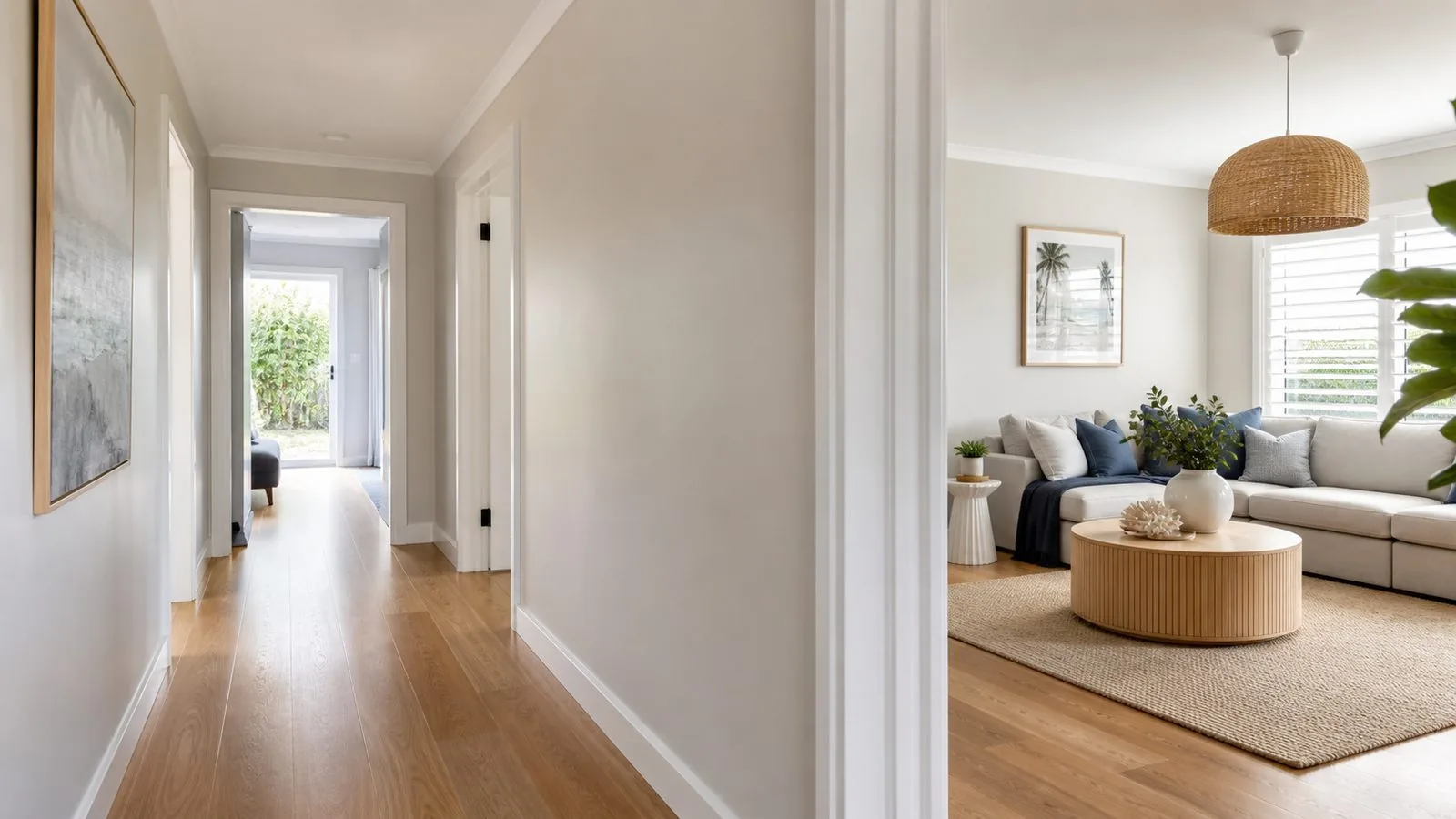
Begin with the rooms you cannot lose
Living at home during an interior repaint is a scheduling problem as much as a colour decision. Start by listing what the household must continue doing: sleeping, cooking, bathing, working, studying and moving safely between rooms. Mark the only bathroom, the main entrance and any room needed for daytime sleep. A painter can plan around a clearly described restriction more effectively than around a general request to keep disruption low. Be specific about when each room is essential and whether an alternative exists elsewhere in the home.
Separate preferences from constraints. Keeping the television room available may be convenient, while access to the only toilet is essential. A home office with scheduled client calls may need predictable quiet periods even when painting itself is not noisy. Preparation, furniture movement and doors opening can still interrupt work. Do not assume room-by-room painting means a room is unavailable for only one short block. Preparation, coating, drying and later detail work can require several visits to the same area. The useful starting brief is a map of essential functions, not a fixed promise about how many rooms can be completed each day.
Create a genuinely separate living zone
Identify a part of the home that can remain outside the active work area, with a usable route to the facilities you need. A spare bedroom is not a practical retreat if the only route to it passes through the room being prepared. Think about doors, corridors and the movement of equipment as well as floor area. Agree where furniture will be stored and where tools and materials may be kept. A central pile of belongings can block access to the very wall the painter needs or create an obstacle on an otherwise safe route.
For a Pakenham household with children or pets, separation needs to work when people are distracted. A verbal instruction not to touch the walls is not a physical barrier. Discuss suitable boundaries and who remains responsible for supervision. Keep food, pet bowls, toys and everyday clothing outside the work zone. Avoid using a freshly painted room as overnight storage simply because its floor looks clear. The coating may still need protected drying time, and returning belongings too soon can make the next stage harder. An agreed storage area and a clear route often matter more to daily comfort than the order in which wall colours are applied.
Discuss products, ventilation and return to use
Ask which products are proposed for walls, ceilings, trim and any specialist primers. A project may use more than one type of coating, and its preparation or stain treatment can introduce different requirements. Request the relevant product instructions and safety information. Low odour does not establish that a room is ready for every occupant to use, and dry to touch is not the same as ready for washing or normal contact. The instructions for the actual products, the work being performed and the conditions in the room should guide the return-to-use discussion.
Explain any household sensitivities before the schedule is agreed. Where an occupant has a relevant medical concern, discuss suitable arrangements with their treating professional and the painter rather than relying on a generic website assurance. Ventilation must also be practical: windows may need to remain secure, weather can change, and pets may escape through open doors. Ask how fresh air will be managed without circulating preparation dust through occupied spaces. If adequate separation or ventilation cannot be achieved, temporary alternative accommodation may be the sensible planning outcome. The decision should come before work begins, not when someone discovers that the only bedroom cannot comfortably be used that night.
Choose between room stages and surface stages
A painter may prefer to prepare several rooms together, coat ceilings together and then move through walls and trim. That sequence can reduce repeated setup, but it may make too much of an occupied home unavailable at once. Completing one room through several stages before starting the next can preserve living space, although it may increase handling and return visits. Ask for the proposed sequence in ordinary language. You need to know which spaces are active, which are drying and which have been released for agreed use.
Use decision points rather than treating the programme as an unconditional timetable. For example, the next bedroom stage might begin after the first bedroom has met the agreed return-to-use conditions. A repair that needs further assessment or a coating that dries more slowly should trigger a conversation about the next stage. It should not automatically lead to opening every room at once. Confirm how the painter will communicate changes and who in the household can approve them. Where the quote assumes empty rooms, ask what additional arrangements are needed for an occupied house. That makes a staged approach a defined part of the scope rather than an informal favour expected during the job.
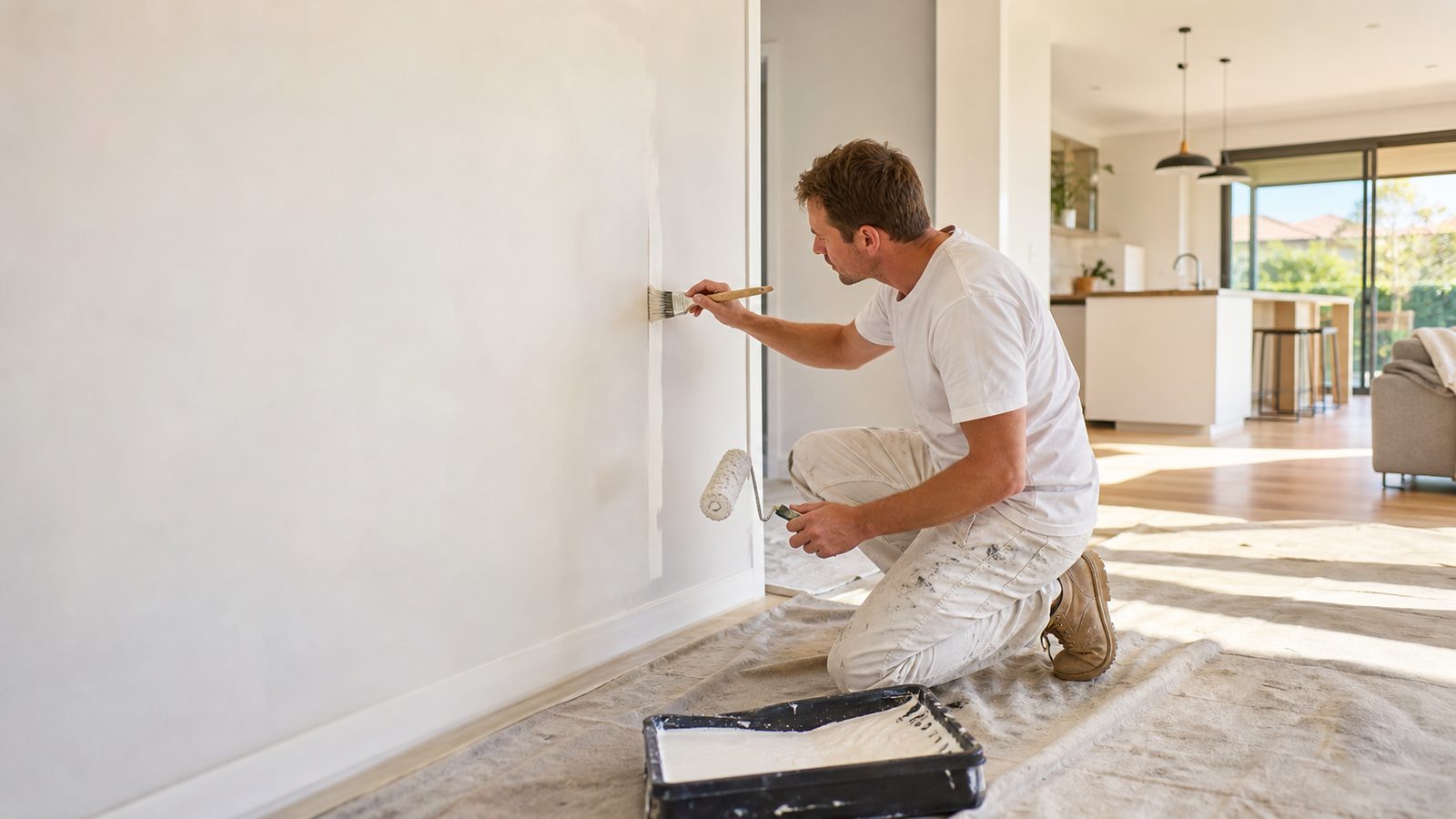
Make furniture movement and protection explicit
Create a list of items that are heavy, fragile, fixed or difficult to disconnect. A wall-mounted television, a large aquarium and a fitted wardrobe need different treatment from a lightweight chair. Agree who moves each item and whether a specialist is required. Remove small valuables and personal items yourself where practical. Photograph existing damage to furniture, floors and fixtures before the work zone is set up so that later questions can be discussed against a shared record. This is useful project documentation, not a prediction that damage will occur.
Protection needs to remain effective while people are living around it. Floor coverings that work in an empty room may become a trip or slipping concern in a busy corridor. Ask how walkways will be maintained and how the end-of-day condition will be checked. Avoid adding your own tape to newly coated surfaces or unfamiliar finishes without agreement. Adhesives can affect surfaces, and protective materials may have restrictions on when and how they are used. Keep access to exits, switches and essential appliances clear. If furniture remains in the room, ensure the painter has enough working access instead of assuming a narrow gap behind a covered sofa is adequate for preparation and finishing.
A hypothetical family schedule
Imagine a Lakeside household repainting two bedrooms, a living room and a hallway while one adult works from home. There is one bathroom, a cat that normally moves freely indoors and a child who sleeps early. This example is a planning exercise, not a completed customer job. The household's first draft schedule puts the hallway first because it looks worn. On inspection, that would make almost every daily route pass through the initial work area. The more useful question is whether a bedroom can become a separate temporary work and sleeping zone before the hall is opened up.
The household could ask the painter to map active rooms and safe routes, then agree the sequence around the only bathroom and essential calls. The cat needs a secure arrangement away from materials and open windows. The early bedtime needs a return-to-use discussion based on the products rather than an assumption that low odour guarantees readiness. If those constraints cannot be met together, the owners may choose fewer occupied stages or time away during the most disruptive work. The example shows how an apparently simple painting order changes once household functions are considered. The chosen plan should say what happens when a stage runs longer, as well as what is expected when everything proceeds normally.
Agree the end-of-day handover
At the end of each work period, someone should be able to explain which areas may be used, which surfaces must not be touched and which doors or windows need a particular position. Ask for a simple room status note if several people come and go at different times. A partner arriving late should not have to guess whether furniture can be returned or whether a freshly coated door can close. Keep the contact arrangement clear for an unexpected access problem, while recognising that an evening message does not guarantee an immediate visit.
Discuss material storage, tool security and waste removal before the first day. Children and pets should not have access to products or equipment, including items that appear harmless when closed. Essential walkways should be checked after protection is adjusted. If a room is released for limited use, understand the limit: sleeping, moving furniture and washing the walls may each have different requirements. Manufacturer guidance distinguishes stages of drying and curing; avoid compressing them into a single statement that the room is finished. A clear daily handover prevents accidental damage and helps the household plan the next morning without making assumptions about surfaces that merely look dry.
Prepare a household brief before requesting dates
Write down the rooms, the surfaces in each room, furniture responsibilities and any repairs already known. Add the household's essential hours, access routes, pet arrangements and ventilation limitations. Identify whether someone can be present for decisions and how changes should be approved. If the project involves uncertain old coatings, moisture damage or other conditions that could change preparation, raise them early. Do not start scraping or sanding to make the house look ready for the quote. The painter needs to see and assess the actual condition before agreeing a suitable scope.
The occupied-home planner below produces a short discussion brief from your most important constraints. Download it and add a room sketch before contacting the painter. The output does not assess health suitability, specify a safe re-entry time or confirm that the work can be completed while you remain at home. It identifies the decisions that need to be made. A useful quote conversation ends with a workable sequence, clear responsibility for moving belongings and an agreed method for releasing rooms back to use. Those details give you a better basis for comparing plans than a single optimistic completion date with no explanation of how daily life will continue.